
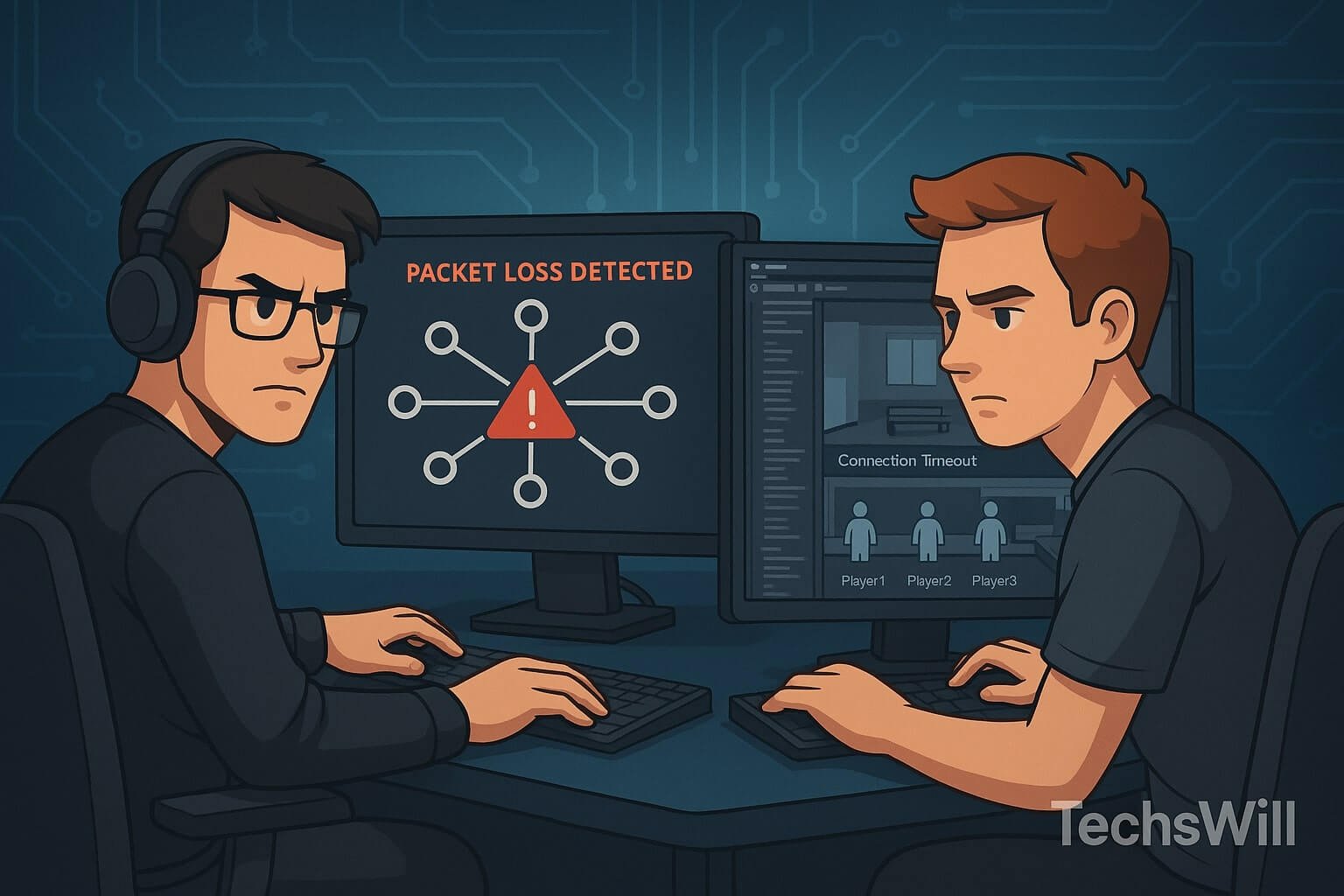
Multiplayer games are more popular than ever in 2025 — but for indie developers, scaling multiplayer systems remains one of the most complex, error-prone, and expensive parts of shipping a live product.
From laggy matches to ghost players and broken progression, many issues stem not from bugs — but from architectural mistakes made early on.
⚠️ 1. No Separation of Game Logic and Netcode
Hardcoding game mechanics directly into networking layers creates a fragile mess. If your shooting mechanic is tightly coupled to packet arrival, expect bugs when latency spikes.
Solution: Design network-agnostic game logic first. Then wrap your netcode around it using state replication, RPCs, and prediction buffers.
🌐 2. Skipping Dedicated Server Planning
Too many indies launch with peer-to-peer or host-client without considering future scale. Then they hit 10k+ CCU and can’t scale without rewriting everything.
Solution: Use dedicated servers from day one (even if simulated locally). Services like Photon Fusion, Exit Games, and PlayFab offer scalable hosted infrastructure.
🧠 3. Ignoring Sync Drift and Authority
When multiple players interact with shared objects (like enemies or loot), desync is inevitable unless ownership and authority are clearly defined.
Best Practice: Only one client should control a shared object. Others should receive updates — not send changes. Use lock-step or server authority where appropriate.
🛠 4. No Testing at Realistic Scale
It works with 2 devs? Cool. But what about 64 players? Or 1,000 concurrent? Without stress tests, you’re guessing.
- Use Unity’s Netcode for GameObjects (NGO) Load Testing
- Automate bots with replay scripts
- Test packet loss and latency spikes using tools like Clumsy or WANem
🗃 5. Skimping on Save and Reconnect Logic
Players expect session reconnection, inventory persistence, and match reentry — even in casual games. Don’t treat this as “extra.”
Tip: Use distributed backends like Firebase, Satori, or your own Redis + Lambda stack for player state sync.
📬 Final Thoughts
Multiplayer is not just netcode — it’s matchmaking, session management, latency handling, and data scale. Start small, modular, and intentional. Build for 1v1, then 2v2, then 4v4 — before you dream of 100-player servers.